The protection of the natural environment, the reduction of environmental footprint, the responsible use of natural resources, and the strengthening of resilience to climate change constitute long-standing priorities for the Group. Within this context, the Group sets clear targets, monitors its performance, and implements data-driven decisions and measures based on recognized best practices, ensuring consistent and responsible operations with due respect for the environment.
Compliance with environmental legislation, along with the effective management and mitigation of environmental risks, forms an integral part of the Group’s strategy and a core element of its business model. Taking into account the nature and scale of its activities, environmental management is a cross-cutting priority, embedded across all stages of project implementation and operation—from initial design and construction to operation and, where required, restoration.
Environmental and Energy Strategy
Acknowledging its responsibility towards the environment and future generations, the Group has adopted a structured environmental and energy strategy, fully embedded in its business model and decision-making processes. In this context, the Group undertakes targeted initiatives and sets specific, measurable targets to consistently reduce its environmental and energy footprint.
This strategy strengthens the Group’s environmental and operational resilience by consistently reducing environmental risks and integrating prevention and responsible management into decision-making. At the same time, it contributes to ensuring long-term sustainable development and creating lasting value for stakeholders, actively supporting the achievement of the Sustainable Development Goals (SDGs).
Environmental and Energy Management System
The Group implements an integrated Environmental and Energy Management System aimed at the timely identification and analysis of environmental and energy risks. This approach enables continuous improvement in environmental performance and the effective implementation of the Group’s strategy to reduce environmental impacts. The steps of the strategy are as follows:
01
Initial assessment of environmental aspects
02
Documentation and standardization of working methods
03
Planning and organizing of procedures
04
Integration of new technologies
05
Addressing impacts at their source
The Environmental Management System of the Group and its subsidiaries, namely TERNA, TERNA LEFKOLITHI, NEA ODOS, KENTRIKI ODOS, HERON Group, and GEK SERVICES, is certified in alignment with the international standard ISO 14001:2015. In addition, TERNA applies an Energy Management System, certified according to ISO 50001:2018, across all its projects and facilities.
GRI2-27SASBIF-EN 160a.1
Internal Audits and Continuous Improvement
The Group conducts annual internal audits across all its operational activities, to ensure compliance with the approved environmental terms, as applicable to each facility and operational function, as well as with the requirements set by internal systems procedures and the respective ISO standards. Through these audits, the Group enhances transparency, responsibility, and operational resilience, making a meaningful contribution to achieving its sustainability objectives and ensuring compliance with the prevailing regulatory and institutional framework.
The internal audit process supports the achievement of the following objectives:
Assessment of compliance with applicable environmental legislation
Alignment with customer requirements
Verification of the implementation of Environmental and Energy Management Systems
Identification of improvement opportunities
Ensuring the effective implementation of management and risk management systems
Training and Awareness-Raising for Environmental and Energy Responsibility
Continuous training and awareness-raising among workforce is a key prerequisite for the effective implementation of the Group’s environmental and energy strategy. Strengthening environmental awareness and cultivating a culture of responsibility play a vital role in the prevention and effective management of environmental issues, as well as to the reduction of the overall environmental footprint.
Based on the specific needs of each project and considering the roles and responsibilities of employees, the Group’s Health, Safety, Environment and Energy Division, in collaboration with the Environmental Officers of each project, designs and implements annual training programs covering a broad range of topics related to:
Environmental compliance and management
Energy efficiency and conservation
Circular economy and sustainable practices
Social impacts and responsible operations
Through these initiatives, the Group strengthens employees’ ability to identify and manage environmental and energy risks, integrating the principles of sustainability into their daily work.
2025 Insights
Zero
incidents of non-compliance with environmental permits, standards, or regulations.
No
monetary fine or other type of sanction was imposed in relation to violations of environmental legislation and relevant regulations.
GRI3-3
Climate Change Mitigation and Adaptation
The Group acknowledges that climate change is one of the most significant challenges of our time and actively participates in national and international efforts to mitigate climate change while effectively adapting to its inevitable impacts. With a consistent focus on respect for the environment and society, the Group shapes its business model and strategy in a way that integrates the principles of responsibility and sustainability, confirming its commitment to effectively addressing the climate crisis.
In the context of its ESG Policy implementation, the Group has set specific commitments regarding the management of energy and greenhouse gas emissions:
Annual monitoring and reporting of GHG emissions across all Group subsidiaries.
Implementation of targeted action plans to reduce its carbon footprint.
Guarantees of Origin covering 100% of the Group’s subsidiaries by 2030.
Achievement of a minimum participation rate of 70% in energy-related training across its workforce.
Through these targeted initiatives and commitments, the Group aims to reduce its energy footprint while systematically integrating climate-related risks into its operational processes, thereby strengthening its competitive positioning and enhancing the long-term value delivered to its stakeholders.
At the same time, in light of the increasing frequency of adverse natural events (including extreme weather events, fires, floods, increased seismic activity, etc.), climate change adaptation has emerged as a critical priority for ensuring business continuity and safeguarding the integrity of its people, infrastructure, and operations. To this end, the Group has conducted a resilience assessment to identify climate-related risks and opportunities that may impact its core business sectors, prioritize the most material among them, and define appropriate, context-specific management responses.
The Group actively manages the impacts of its activities that contribute to the increase in Greenhouse Gas (GHG) emissions, acknowledging its pivotal role in shaping a sustainable future. As part of its carbon reduction strategy, best practices for the quantification and management of GHG emissions (Scopes 1, 2, and 3) are applied, enabling effective monitoring of its carbon footprint and the systematic design and implementation of improvement actions.
SCOPE 1
Direct emissions
Emissions that arise directly from sources owned or controlled by the Group, within facilities under its operational control.
Emissions associated with electricity consumption are calculated using two approaches: location-based (using the national grid average emission factor, reflecting the country’s energy mix) and market-based (using specific procurement choices, including Guarantees of Origin certifying RES electricity supply).
SCOPE 3
Indirect emissions from the Group’s value chain
All other indirect emissions resulting from activities across the Group’s value chain.
The total emissions (in tCO₂e) per emission category are presented in the following chart**, reflecting the Group’s commitment to transparency and continuous progress in sustainable development.
Scope 1
2025
1,072,352.5tCO₂e
▲ +33.8% vs 2024
1,072,352.52025
801,370.82024
Scope 2
2025
25,910.4tCO₂e
▲ +40.9% vs 2024
25,910.42025
18,390.62024
2025
10,333.5tCO₂e
▲ +214.6% vs 2024
10,333.52025
3,285.12024
Scope 3
2025
3,687,801.2tCO₂e
▼ −42.5% vs 2024
3,687,801.22025
6,415,898.42024
Direct emissions per business sector (Scope 1)
Electricity generation from thermal sources92.7%
Industry — Quarries3.8%
Construction2.9%
Concessions0.6%
Other activities0.01%
Indirect emissions per business sector (Scope 2)
Electricity generation from thermal sources80.47%
Concessions18.08%
Construction1.45%
Scope 3 emissions distribution per Category
Category 123.2%
Category 20.1%
Category 331.7%
Category 40.7%
Category 50.9%
Category 60.01%
Category 70.04%
Category 101.1%
Category 1141.95%
Category 120.3%
*The Group’s total carbon footprint (Scope 1, 2, 3) for 2024 and 2025 has been subject to external independent assurance in the context of the 2025 Sustainability Statement.
**Scope 2 emission values for 2024 have been revised compared to the published 2024 Performance Indicators, due to an update of electricity consumption data at a Group subsidiary (TERNA Bulgaria). The updated and final values are reflected in the 2025 Sustainability Statement, which is incorporated into the 2025 Annual Financial Report and has been subject to external independent assurance.
For 2025, Scope 3 indirect emissions amounted to 3,687,801.2 tCO₂e, reflecting a significant decrease compared to 2024. This reduction is primarily driven by changes in the data relating to energy traded and resold by the Group, as well as the corresponding emission factors, which vary accordingly (Category 3).
Emissions associated with the upstream value chain totaled 2,088,861.7 tCO₂e, while those related to the downstream value chain reached 1,598,939.5 tCO₂e, representing respective decreases of 50.3% and 28.4% compared to 2024.
Total Scope 3 emissions — 2025
3,687,801.2tCO₂e
56.6%Upstream
43.4%Downstream
Upstream — Scope 3 emissions2,088,861.7tCO₂e
Downstream — Scope 3 emissions1,598,939.5tCO₂e
Scope 3 composition — 2025 vs 2024
UpstreamDownstream
2025
56.6% Upstream43.4% Downstream
2024
65.3% Upstream34.7% Downstream
2025 Insights
73,256MWh
Guarantees of Origin for renewable electricity secured by the Group.
65.9%
of total annual electricity consumption is sourced through Guarantees of Origin.
ESRSE1-1ATHEX ESGSS-E1
GEK TERNA Group actively supports global and national initiatives aimed at mitigating climate change and addressing climate-related challenges through adaptation. While a comprehensive transition plan has not yet been established, the Group recognizes the importance of aligning with European initiatives targeting climate neutrality by 2050 and intends to initiate the development of a strategic transition plan in the near term. This plan will be fully aligned with its business strategy as well as its ESG policy and strategy, and will define the Group’s pathway towards sustainable and climate-neutral future growth.
GRI3-3GRI302-1ATHEX ESGC-E3ESRSE1-5
Energy Management
The Group implements targeted measures to ensure the efficient management of energy consumption and the responsible use of natural resources across all its operations. Within this context, it systematically records and monitors energy consumption across offices, construction sites, and facilities, with the aim of assessing its energy needs and implementing actions to reduce consumption.
In 2025, the Group’s total energy consumption amounted to 5,605,664.2 MWh (20,180.4 TJ). Energy use comprises electricity consumption as well as fuels for stationary and mobile combustion. Total electricity consumption reached 111,098.5 MWh, of which 66.2% originated from renewable sources, either through the procurement of Guarantees of Origin or through self-consumption of electricity generated from renewable energy sources (RES).
Energy consumption across the Group’s operations primarily relates to the use of construction machinery, vehicles, and electromechanical equipment, as well as combustion units, generators, and lighting needs.
Composition of energy consumed — 2025
Natural gas94.5%
Gasoline3.5%
Electricity2.0%
Energy Consumption Evolution (2024–2025)
Total energy consumption (MWh)▲ +46.9% vs 2024
3,816,397.92024
5,605,664.02025
Electricity consumption (MWh)▲ +54.4% vs 2024
71,899.32024
111,098.52025
Energy from renewable sources (%)▼ −0.7 percentage points vs 2024
2.3%2024
1.6%2025
Actions for Energy Management
At the same time, the Group implements the following measures on an annual basis to ensure the effective application of its ESG Policy and its commitments to reducing its energy footprint and contributing to global decarbonization efforts.
Decarbonization levers
Actions/Measures
Achieved or expected outcomes
Energy efficiency improvement
Systematic recording and monitoring of energy consumption across offices, construction sites, and facilities.
Assessment of energy needs and implementation of actions to reduce energy consumption across operations, contributing to the reduction of Scope 2 emissions.
Renewal and maintenance of construction machinery.
Extension of asset lifespan and improvement of energy efficiency.
Renewable Energy Sources (RES)
Promotion of long-term Power Purchase Agreements (PPAs) in Greece.
HERON offers long-term Power Purchase Agreements (PPAs) to large commercial and industrial consumers, secured through corresponding agreements with photovoltaic park producers.
By the end of 2025, HERON maintained an active portfolio of 22 corporate PPAs, with total contracted energy of 93.3 GWh annually, serving industrial companies and large commercial customers across various sectors of the Greek economy. Through PPAs, customers secure long-term access to electricity from Renewable Energy Sources (RES) at a stable, competitive price, typically over a horizon of ten to twenty years, while simultaneously gaining predictability in their energy costs and documented reduction of their carbon footprint, as each MWh is accompanied by a corresponding Guarantee of Origin (GO) from Greek RES plants.
HERON’s strategy is fully aligned with national and EU targets, supporting the competitiveness of Greek enterprises, increasing the penetration of renewable energy sources (RES) in the energy mix, and accelerating the development of new RES projects through bilateral commercial agreements with end consumers.
Issuance of guarantees of origin (GOs)
Provision of Guarantees of Origin to business clients upon request, as well as to residential customers who choose the ECO GENEROUS commercial programs. These Guarantees of Origin—or Green Certificates—are issued by the RES and Guarantees of Origin Operator (DAPEEP) in accordance with EU Directives 2003/54/EC and 2009/72/EC and national legislation, certifying that a specific quantity of electricity was generated from RES.
Electromobility
Replacement of the passenger vehicle fleet with electric and hybrid vehicles.
Reduction of CO2 emissions from transportation.
Energy efficiency improvement
Upgrade of lighting and air conditioning equipment using energy-efficient technologies.
Reduction of energy consumption through technologies that enhance building performance.
Integration of energy-saving principles into construction projects—where feasible—through building insulation, use of energy-efficient windows, and optimization of natural lighting and ventilation.
Enhancement of sustainability and energy efficiency in construction.
Support for obtaining green building certifications for construction projects, such as LEED*, BREEAM**.
These certifications validate the sustainability of construction practices and strengthen the Group’s reputation.
**Building Research Establishment Environmental Assessment Method
HERON Group Initiatives
HERON Group, continuously striving to evolve and adapt to new market conditions with a focus on People, the Environment, and Society, has implemented targeted actions and initiatives to actively contribute to enhancing energy efficiency and reducing the environmental impact of its operations.
Demand Response Service — Intelligent Participation in National System Management
HERON offers its corporate customers the opportunity to actively participate in the management of the National Electricity System through the Demand Response service. Through this service, participating consumers commit to flexibly increasing or decreasing their energy load upon signal from ADMIE, thereby fulfilling a reserve role that was traditionally held exclusively by generation units. In return, they are compensated for the flexibility provided, transforming an operational capability of their facilities into a source of revenue.
The service is particularly important in the context of the energy transition: as the share of renewable energy sources (RES) in the energy mix increases, the variability of generation makes demand-side management necessary as a complementary means of system balancing. Demand Response leverages precisely this flexibility on the consumption side, contributing to the reduction of the need to activate conventional peak units, with direct benefits for grid stability, the environmental footprint of the system, and the overall cost of energy for the market.
HERON Group is pioneering in the Greek electricity market through the development of innovative products that combine financial benefits for the consumer with a contribution to the energy transition and grid stability.
In this context, HERON designed and launched to the market the HERON Happy Hour program family, which constitutes a comprehensive smart pricing solution that dynamically leverages wholesale market price signals to benefit both consumers and the grid simultaneously. On a daily basis, when generation from Renewable Energy Sources (RES) peaks and market prices decline, HERON's trading desk identifies the optimal three-hour window and guarantees three consecutive hours of electricity with zero supply charge to participating customers who have a smart (remotely read) meter by HEDNO. Customers are informed the previous day through a notification from the EnergiQ by HERON application, allowing them to plan in advance the use of high energy-consuming appliances — washing machine, dishwasher, electric vehicle charging — within the zero-charge window.
The value of the Happy Hour programs is not limited to the immediate financial relief for the consumer. Through shifting demand to hours of peak RES generation, the programs contribute to smoothing the load curve, reducing the required withdrawals from the grid, and more broadly to the absorption of green energy that would otherwise be curtailed. They therefore constitute a market-neutral demand response mechanism that benefits system stability and the market overall. For 2025, the savings achieved by active users of the program are estimated to correspond to a return of approximately 12% on their bill.
At the core of the consumer experience is the EnergiQ by HERON application, which provides daily notifications for zero-charge hours, hourly consumption data, and personalized energy-saving advice. Through the application, HERON transforms the consumer from a passive recipient of the energy system into an active participant in the green transition.
HERON PPAs & VPPAs — Long-term Green Energy Power Purchase Agreements
HERON Group, leveraging its unique synergy with TERNA ENERGY within the framework of GEK TERNA Group, has become a pioneer in the development of corporate long-term Green Electricity Power Purchase Agreements (PPAs) in the Greek market. By the end of 2025, HERON maintained an active portfolio of 22 corporate PPAs, with total contracted energy of 93.3 GWh annually, serving industrial companies and large commercial customers across various sectors of the Greek economy. Through PPAs, customers secure long-term access to electricity from Renewable Energy Sources (RES) at a stable, competitive price, typically over a horizon of ten to twenty years, while simultaneously gaining predictability in their energy costs and documented reduction of their carbon footprint, as each MWh is accompanied by a corresponding Guarantee of Origin (GO) from Greek RES plants.
At the same time, HERON offers the option to enter into Virtual Power Purchase Agreements (VPPAs), an innovative financial solution particularly suited to large organizations with geographically distributed facilities. Unlike a physical PPA, a VPPA is a purely financial Contract for Differences: the buyer pays the RES producer a fixed price per MWh, while the generated energy is fed into the wholesale market. The buyer continues to procure physical energy from its usual supplier, but receives the corresponding Guarantees of Origin, which substantiate the use of renewable energy for GHG accounting purposes in accordance with the GHG Protocol (Scope 2, market-based method). In this way, companies that are unable to directly contract physical green energy gain access to a reliable and regulatorily recognized decarbonization tool, fully aligned with the requirements of CSRD/ESRS and the EU Taxonomy.
The dual offering of PPAs and VPPAs positions HERON as a key intermediary between RES generation capacity and the corporate sustainability objectives of its customers. At the same time, each PPA concluded contributes to the financing of new RES projects, strengthening "additionality" in the Greek energy mix and accelerating the national energy transition. The utilization of Optimus Energy, a subsidiary of HERON Group with a leading presence in the aggregation of RES plants, further enhances the capability to structure and manage complex long-term energy supply agreements.
Green Services «Energeies Brosta» by HERON Group — Integrated Green Energy Solutions for Every Customer
Within the framework of its strategy for the energy transition, HERON has developed the "Energeies Brosta" green services portfolio, through which it offers its customers — residential and business — integrated solutions for energy generation, efficiency, and sustainable energy management. These services reflect the Group's belief that the energy transition is not only about large-scale projects, but is implemented daily on the rooftop, in the home, and in the workplace of every citizen.
EcoRoof — constitutes HERON's self-generation service, through which photovoltaic systems are designed and installed on residential and commercial rooftops, providing consumers with the ability to generate their own green energy. In 2025, HERON implemented self-generation technical projects of total capacity 350 kW for large corporate customers, while also completing more than 40 projects for residential customers — a result that highlights both the reach of the service and the growing demand for energy autonomy at household level.
EcoHeat — is addressed to consumers who wish to upgrade the energy efficiency of their heating systems, offering an integrated solution for connection to natural gas or replacement of old boilers, with 24-month interest-free financing for the supply and installation of new equipment. In 2025, the service is further enhanced with two distinct solutions under the EcoHeat Pump & Gas initiative: high-efficiency heat pumps in collaboration with AHI-CARRIER, and natural gas boilers in collaboration with Caloria, thereby covering a wide range of needs and technological preferences.
EcoDrive — addresses one of the key prerequisites for the widespread adoption of electromobility, namely the development of charging infrastructure. Through this service, HERON supports corporate and residential customers in the design, installation, and operation of private electric vehicle charging stations at their premises, contributing to the development of an integrated green mobility ecosystem. In 2025, the company implemented more than 80 private Charging Station projects, providing solutions for both conventional (AC) and fast (DC) charging. In addition to the supply of chargers and the implementation of technical works, customers have the ability to monitor charging activity and operations through a comprehensive monitoring and operational support service for Charging Stations.
Energy audit services and energy savings reporting services for HERON's corporate customer base, supporting compliance with international and national certification standards (ISO, Law 4342, etc.).
Overall, the "Energeies Brosta" portfolio reflects HERON Group's strategic choice to accompany customers at every step of their energy transition — from generation and heating to electromobility — offering solutions that are accessible, economically viable, and environmentally responsible.
Green Mobility via Charging Network
With the aim of directly serving drivers of Electric and Hybrid vehicles, HERON is developing a nationwide Electromobility Network, under the name HERON Pulse, offering electric vehicle charging points in both standard (AC) and fast (DC) charging categories.
Charging points are located at existing and new locations across the road network nationwide (in publicly accessible areas, roads, and motorways). Through the dedicated application made available to the public in 2024, HERON provides users with the ability to locate charging points within the available HERON Network and recharge their vehicles, benefiting from competitive pricing.
Innovation and Technology for the Sustainable Energy Transition
Recognizing the decisive role of technological innovation in shaping a sustainable and climate-neutral energy future, HERON has established a specialized Applied Research and Development (R&D) Team. The mission of the team is to develop innovative solutions that accelerate the sustainable transition, through:
the reduction of the carbon footprint of end consumers,
the increase in the use of energy from Renewable Energy Sources,
the improvement of energy efficiency, with the aim of also reducing energy costs.
The technologies developed adopt a progressive and customer-centric energy management model, contributing substantially to the achievement of sustainability targets at both national and European level.
Reducing Household Consumption & Carbon Footprint
Within the framework of its active participation in 13 European HORIZON research projects and one project co-funded by the NSRF (ESPA), HERON collaborates with stakeholders from the academic and research sector, innovation companies and startups, as well as major European energy companies. Through these collaborations, HERON has already developed and is piloting tools that enable consumers to monitor and manage their total electricity consumption — including electric vehicle charging — and to be informed about the share of energy originating from Renewable Energy Sources (RES).
More specifically, HERON has developed a smartphone application (mobile application) through which users can:
monitor their household's total consumption as well as the individual consumption of energy-intensive devices (appliances, EV chargers),
be informed about the RES share in the grid,
receive personalized energy-saving recommendations in relation to RES generation and the reduction of their energy consumption,
remotely control the electric water heater,
adopt more sustainable energy consumption habits.
The operation of the application is based on the use of advanced smart metering devices (meters, sockets, relays, etc.), while the development of both the application and the metering infrastructure is supported and financed by the European Programs in which HERON participates.
HERON's strategic objective is the evolution of the developed tools into comprehensive digital services, which will be made available to its customers on a large scale. These services will enhance the active participation of consumers in energy management, promote transparency in consumption, contribute substantially to the reduction of their carbon footprint, and support the achievement of national and European sustainability targets.
Through the implementation of this strategy, HERON confirms and strengthens its role as a dynamic driver of sustainable energy transition, offering solutions that integrate technological innovation with environmental responsibility.
Thematic Pilots & Collaborations
The Applied Research & Development Team of HERON Group, within the framework of European Research Programs, implements thematic pilots to test new products and services in a low-risk environment.
Residential Pilot — The largest pilot to date, implemented in residences equipped with IoT devices (smart meters, sockets, relays, sensors).
Living Yard (1 & 2) — Two complexes of short-term and mid-term rental serviced apartments in Chalkida, designed for digital nomads, featuring heat pumps and real-time smart energy consumption monitoring.
Smart EVs Charging Pilot — Development of a smart charging framework using artificial intelligence to forecast RES generation and charging demand, aiming to optimize the use of RES and reduce the carbon footprint.
Power Plant Replication site — HERON's generation unit participates in a European Research Program as a replication site for the study and development of a method for storing excess heat in fossil fuel-based power plants. This energy will be able to be reused by the plant for electricity generation, thereby reducing the use of fossil fuel and consequently the unit's carbon dioxide emissions.
Smart Monitoring & Optimisation of Natural Gas Consumption
HERON's innovative activity extends beyond electricity and into the natural gas sector, where the Group participates in the development and pilot implementation of a digital solution for optimizing heating consumption. The solution leverages advanced Machine Learning algorithms that analyze in real time the behavior of heating systems, weather conditions, and consumption patterns, dynamically adjusting their operation to achieve optimal energy performance. In this way, conventional heating installations are transformed into "smart devices", capable of achieving energy savings of up to 30% compared to their conventional operation — with a direct impact on both the consumer's cost and the CO2 emissions associated with building heating.
This technology falls within the broader framework of the energy efficiency objectives set by the Energy Performance of Buildings Directive (EPBD) and is aligned with reporting requirements under the CSRD/ESRS framework, particularly with regard to reducing energy intensity in the building stock.
Supporting National Energy Efficiency Targets
HERON, through its Applied Research and Development team, actively contributes to the implementation of the commitments arising from the National Energy Efficiency Action Plan (NEEAP), within the framework of implementing Article 7 of Directive (EU) 2023/1791 on Energy Efficiency. The Group's initiatives — ranging from the development of smart consumption optimization tools to the promotion of self-generation and electromobility — constitute measurable energy-saving interventions that are aligned with the monitoring and evaluation mechanisms coordinated by the Centre for Renewable Energy Sources and Saving (CRES). In this way, HERON is not limited to the role of an energy supplier, but assumes an active role in the national effort to achieve energy efficiency targets, linking its commercial activity with the systematic reduction of the energy intensity of the Greek economy.
Taking into account the environmental impacts that may arise from its operational activities, the Group applies a structured approach focused on prevention, management, and restoration across the areas where it operates. Through this approach, responsible operations are strengthened and the uninterrupted implementation of the business model is ensured, with respect for the natural environment.
A significant step in identifying and tracking the Group’s impacts is the environmental permitting procedures, which are implemented in full compliance with the requirements of European and national legislation. In particular, throughout the construction and operational phases of its projects, the Group conducts Environmental Impact Assessments (EIAs), Special Ecological Assessments (SEAs), Special Ornithological Studies, and Environmental Monitoring Programs, in collaboration with specialized consultants. These activities aim to gather the necessary information to safeguard local ecosystems, as well as investigate and implement appropriate mitigation and restoration measures.
Within this framework, the Group ensures that the findings of environmental studies are effectively integrated into both project design and implementation, as well as into consultation processes. Ongoing engagement and open dialogue with stakeholders are consistently pursued across various stages of the Group’s activities, aiming to establish communication channels and foster relationships of trust with the broader community.
Recognizing its responsibility to protect biodiversity, the Group’s ESG Policy includes a dedicated pillar for the protection and preservation of biodiversity and ecosystems. This policy outlines the Group’s management approach, focusing on the following areas:
Conservation of mountain ecosystems, including biodiversity.
Restoration of land used and affected by the Group’s business activities.
Enhancement of afforestation and reforestation efforts both local and national levels.
In this context, the Group defines specific actions and commitments linked to the impact of its operations, which serve as benchmarks for monitoring performance and the effectiveness of its biodiversity conservation efforts:
Zero incidents of biodiversity degradation.
Annual monitoring of biodiversity risks and impacts across all environmentally permitted sites located within Natura network areas.
Annual ornithological monitoring studies, where necessary.
Installation of technical protection systems, where necessary.
Given that a large part of the activities is carried out in biodiversity-sensitive areas, an environmental management system is applied covering all Group activities. To this end, the following take place on an annual basis:
Implementation of certified systems.
Staff training on biodiversity protection at project sites.
Initiatives promoting the protection and enhancement of local ecosystems (e.g. tree planting).
Application of Best Available Techniques (BAT) in the industrial facilities’ production activities.
Through these actions, the Group seeks to strengthen its positive contributions while reducing actual and potential negative impacts arising from its operations, with the aim of preventing incidents of biodiversity degradation. At the same time, in full compliance with the approved environmental terms of its projects and to ensure responsible business operations, the Group undertakes necessary measures such as:
01Construction of wildlife overpasses or tunnels to allow safe passage of fauna.
02Slope stabilization.
03Hydraulic studies to define erosion control measures for natural slopes.
04Noise protection works for neighboring areas.
05Infrastructure to ensure uninterrupted surface water flow.
06Installation of bird collision prevention systems.
Overall, the Group’s facilities and infrastructure, covering a total area of approximately 2,118 hectares, as well as network sections extending over a total length of 18.1 km, fall within areas designated under the Natura 2000 network.
2025 Insights
In 2025, no incidents or complaints were recorded by regulatory authorities, environmental inspectors, non-governmental organizations, or local communities in relation to violations of environmental terms associated with biodiversity and ecosystem degradation arising from the Group’s activities.
Case study — Central Greece Motorway (E65)
A notable example is the E-65 motorway, which crosses areas of high ecological value. As part of its environmental strategy and commitment to biodiversity conservation, GEK TERNA Group has constructed and integrated wildlife crossings at selected points along the network.
These crossings enable the safe passage of wild animals, maintaining ecological corridor continuity and reducing the risk of traffic accidents. This initiative aligns with the principles of sustainable development and reinforces the environmental responsibility of transport infrastructure.
The Group’s commitment to biodiversity conservation is demonstrated through its efforts to restore the natural landscape of areas affected by its business activities, as well as through initiatives aimed at safeguarding local ecosystems.
As part of the construction of the E-65 motorway, the Group initiated in 2023 and continues to implement the restoration of two old, inactive quarries with a total area of 43,600 m², located in the municipalities of Lamia and Domokos. The restoration uses excavation materials and includes both morphological rehabilitation of the terrain and vegetative restoration through planting.
Circular economy constitutes a core pillar of the Group’s ESG approach, enhancing the sustainability of its business model and contributing substantially to environmental protection. Its principles are applied horizontally across key operational areas, with the aim of:
Preserving and optimizing the use of natural resources and raw materials
Ensuring effective waste management
Enhancing efficiency throughout the lifecycle of products and services
This approach is embedded within the Group’s broader sustainable development practices and supports the transition towards a more resilient and environmentally responsible business ecosystem.
Preservation of Natural Resources and Raw Materials
Responsible selection of raw materials is a key priority for the Group, as it directly affects both the quality of its projects and its environmental and energy footprint. In this context, emphasis is placed on using high-quality materials, characterized by resilience to extreme weather conditions and low environmental impact, thereby supporting efficient resource utilization and the application of circular economy principles.
At the same time, for specific waste streams, the Group promotes the recovery of materials that can be recycled or reused (e.g., excavation, construction, and demolition materials) to meet the needs of other operational activities. The adoption of this practice delivers multiple benefits, including waste reduction, conservation of natural resources, and enhanced connectivity between business units through circular material flows.
Development of Waste Management Projects
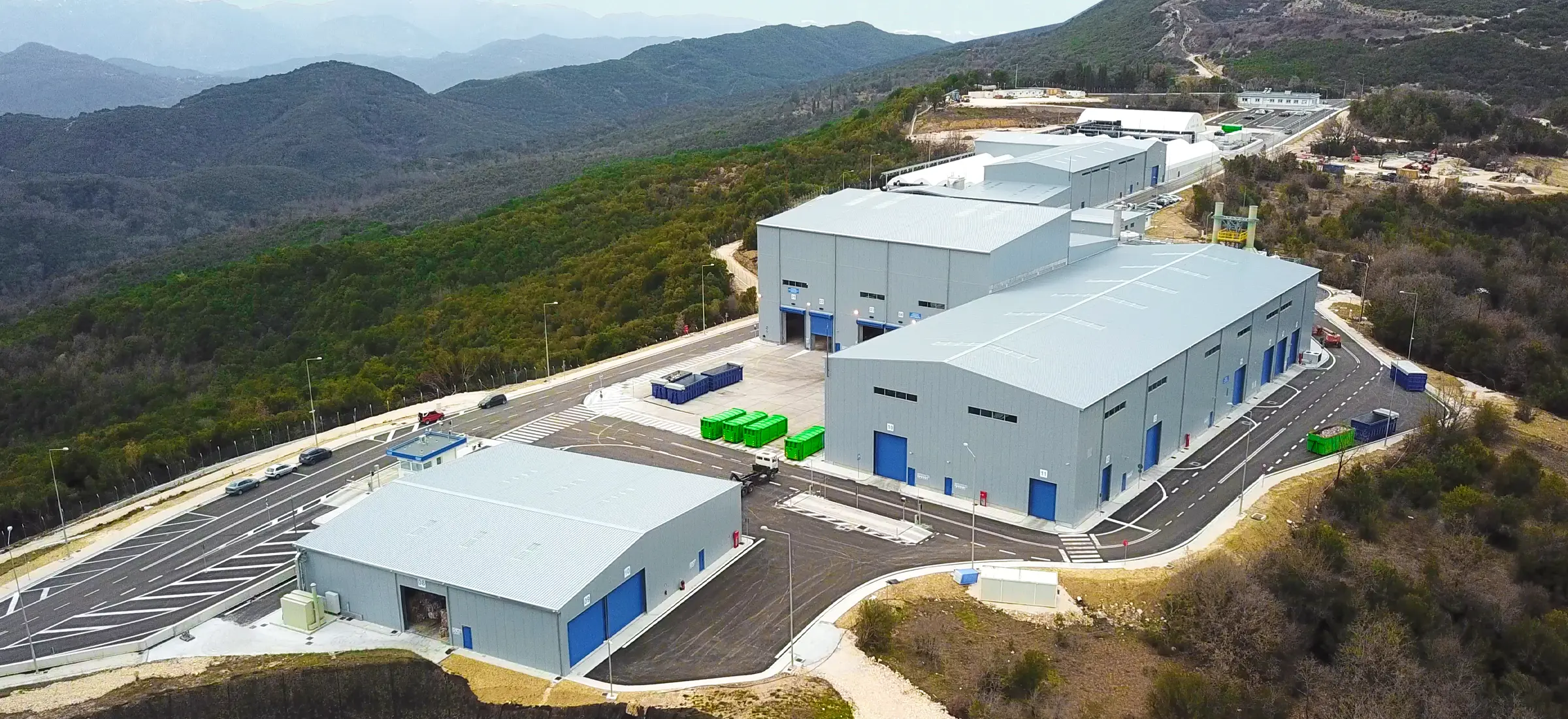
The Group invests in the development of waste management projects through Public-Private Partnerships (PPPs), which form part of its broader environmental strategy. These initiatives support the transition to a more circular and resilient resource management model. Notable examples include the Integrated Waste Management Units in the Regions of Epirus and Peloponnese. Through the operation of these facilities, the following outcomes are achieved:
Reduction of soil and groundwater pollution
Improvement of hygiene conditions for local communities and vulnerable social groups
Enhancement of environmental awareness among citizens
Prevention of uncontrolled waste disposal and promotion of material recovery
Waste Management
The Group implements a holistic program for the management of hazardous and non-hazardous waste, with the key objective of reducing both the volume generated and level of hazardousness. In this context, specific environmental indicators are continuously monitored to improve the Group’s performance, with emphasis on preventing landfill disposal and strengthening material recovery.
Waste management activities are guided by the waste hierarchy in line with circular economy principles, prioritising waste prevention, preparation for reuse and recycling. Final disposal is only selected when no other technically and environmentally feasible alternatives exist and is always carried out in compliance with applicable legislation. Through this approach, the Group enhances resource efficiency, minimises environmental impacts and promotes the sustainable operation of its activities.
Waste management is carried out in accordance with Approving Environmental Terms, internal procedures, and project requirements, in collaboration with licensed bodies for collection, recovery, treatment, and final disposal. The Group’s subsidiaries, in full alignment with applicable legislation, record and maintain files for all waste, as well as identification forms for hazardous waste.
Effective waste management requires the systematic and detailed recording of all waste generated by the Group’s activities, to ensure the proper assessment of the current situation, the implementation of best practices, and the continuous improvement of environmental performance.
2025 Insights
1,871,248.3tons
Total quantity of waste generated in 2025.
99.7%
of waste was classified as non-hazardous.
Waste generation — 2025 vs 2024
2025▼ −25.2%
1,871,248.3tons
waste generated
Waste management
219,209.4 tTo recovery
1,652,038.9 tTo disposal
Waste composition
4,681.6 tHazardous
1,866,566.7 tNon-hazardous
2024
2,502,921.6tons
waste generated
Waste management
248,059.6 tTo recovery
2,254,862.0 tTo disposal
Waste composition
556.8 tHazardous
2,502,364.8 tNon-hazardous
Waste composition — 2025 vs 2024
Non-hazardous wasteHazardous waste
2025
99.7% Non-hazardous0.3% Hazardous
2024
99.98% Non-hazardous0.02% Hazardous
Waste management — 2025 vs 2024
Waste to disposalWaste to recovery
2025
88.3% To disposal11.7% To recovery
2024
90.1% To disposal9.9% To recovery
Of the total waste (both hazardous and non-hazardous) resulting from the operation of the Group’s companies and the facilities/projects under construction, 11.7% was recovered through recovery methods (R), specifically 214,585.8 tons of non-hazardous waste and 4,623.6 tons of hazardous waste. Compared to the 2024 performance, a slight increase in hazardous waste and a significant decrease in non-hazardous waste are observed.
The management method for all waste from the Group’s operations and waste generation by waste stream are reflected in the following charts:
Hazardous waste4,681.6 t
To recovery4,623.6 t
To disposal57.9 t
Non-hazardous waste1,866,566.70 t
To recovery214,585.8 t
To disposal1,651,981.0 t
Compared to 2024, total waste generated in 2025 decreased by 25.2%. The proportion of hazardous waste showed a slight increase, while non-hazardous waste decreased significantly in absolute terms. At the same time, recovery performance improved, with the share of waste directed to recovery increasing from 9.9% in 2024 to 11.7% in 2025.
Waste diverted from disposal
With regard to hazardous waste that was not utilized through recovery, 100% of it was disposed of in landfill sites. For non-hazardous waste that was not directed to recovery, 22.4% was directed to landfill, 0.3% to incineration without energy recovery, while other final disposal methods were followed for 77.3%.
The Group implements strict preventive measures to mitigate environmental and health risks, ensuring safe collection, storage, and transport of hazardous waste. This approach contributes to eliminating the risk of environmental contamination and is applied across all stages of facility operations.
Liquid waste is classified as either industrial/hazardous waste or urban wastewater, depending on its pollutant load. Its management is carried out through distinct procedures, in accordance with applicable legislation and the Approved Environmental Terms of each project or facility. Waste disposal is carried out exclusively to licensed final recipients, ensuring full compliance with environmental requirements and the protection of natural resources.
Hazardous waste
Recycling99.05%
Other recovery methods0.95%
Non-hazardous waste
Recycling99.97%
Other recovery methods0.03%
Recycling and Reuse of Materials
An extensive recycling system is applied across all Group’s offices, construction sites, and facilities, covering materials such as paper, aluminum, glass, plastic, electronic and electrical equipment, lamps, and batteries. Collection is carried out through designated bins, while further material recovery is ensured through partnerships with specialised and licensed operators.
Emphasis is placed on waste electrical and electronic equipment (WEEE), which is directed to certified recycling facilities with the aim of recovering valuable metals and raw materials. At the same time, the release of hazardous substances, such as heavy metals, into the environment is prevented, while promoting the principles of the circular economy and the sustainable use of natural resources.
The responsible and efficient management of water constitutes a core pillar of the Group’s environmental strategy, reflecting a strong sense of responsibility towards both the natural environment and the human rights of local communities. Water is recognized as a valuable natural resource of limited availability, the management of which directly affects quality of life, ecosystems, and the long-term resilience of the areas in which the Group operates.
In this context, the Group undertakes initiatives aimed at improving water efficiency, implementing practices and continuous improvement programmes across the full range of its activities. This approach takes into account the specific characteristics of each project and facility, as well as local conditions related to water availability and stress, ensuring that actions undertaken are both meaningful and effective. Where technically feasible, water recycling and reuse practices are applied in selected operational processes, reducing the demand for freshwater and maximising the use of available resources.
At the same time, ensuring the quality of both water used and wastewater generated is a key priority. To this end, the Group conducts systematic quality controls in collaboration with authorised and accredited laboratories, with the aim of verifying compliance with applicable quality standards and environmental regulatory requirements. The results of these controls are used to continuously monitor performance and to enable the timely implementation of corrective actions where necessary.
As part of the preventive management of impacts on natural water systems, pollution control measures for stormwater runoff are implemented across all Group projects. These measures include, among others, appropriate drainage infrastructure, sediment control systems and preventive practices at construction sites, in order to prevent the transfer of pollutants to surface and groundwater.
Specifically, the Group’s efforts focus on:
Regular employee training on proper and responsible water management practices
Analysis of the risks and impacts associated with improper water management
Implementation of water recycling and reuse practices, where technically feasible
Regular water and wastewater quality monitoring through authorized laboratories
Implementation of stormwater pollution prevention measures across projects and construction sites
Implementation of an Environmental Management System
Programs to reduce water consumption
Responsible water discharge
Through these actions, the Group seeks to minimize impacts of water use, protect local water resources, and contribute to the sustainable management of a critical natural resource, in alignment with the principles of circular economy and environmental responsibility.
Disclosures under the EU Taxonomy Regulation (Regulation 2020/852)
The EU Taxonomy Regulation (EU 2020/852) is a fundamental tool of the European Commission for achieving climate neutrality by 2050, by redirecting capital flows toward sustainable and inclusive economic growth. According to the Regulation, to assess the eligibility of an economic activity, it must be verified whether the activity is included in the EU Taxonomy and whether it contributes to one or more of the following six environmental objectives:
The 6 environmental objectives of the Regulation
01
CCM
Climate change mitigation
02
CCA
Climate change adaptation
03
WTR
Sustainable use and protection of water and marine resources
04
PPC
Pollution prevention and control
05
CE
Transition to a circular economy
06
BIO
Protection and restoration of biodiversity and ecosystems
According to the Delegated Regulations, non-financial undertakings are required to disclose the proportion of their economic activities that are eligible and aligned with the EU Taxonomy, based on the following key performance indicators:
Turnover
CapEx
OpEx
For an economic activity to be considered environmentally sustainable and aligned with the EU Taxonomy, the following conditions must be cumulatively met:
Contribute substantially to one or more of the six environmental objectives set out in the Regulation (substantial contribution criteria).
Do no significant harm to any of the other environmental objectives (DNSH criteria).
Comply with the minimum social safeguards (MSS) outlined in Article 18 of the Regulation.
The assessment process, in line with the Regulation’s requirements, includes five key stages:
01Identification of eligible economic activities.
02Evaluation of substantial contribution to environmental objectives – alignment with the Technical Screening Criteria.
03Verification of compliance with the "Do No Significant Harm" criteria.
04Confirmation of adherence to minimum social safeguards.
05Calculation of Key Performance Indicators (KPIs).
Eligible activities 2025
For the financial year 2025, the Group’s eligible and taxonomy-aligned economic activities primarily relate to activities contributing to the environmental objectives of climate change mitigation and adaptation.
CCM 4.1
Electricity generation using solar photovoltaic technology
Climate change mitigation.
CCM 4.5
Electricity generation from hydropower
Climate change mitigation.
CE 4.1
Provision of IT/OT data-driven solutions
Transition to a circular economy.
CCM 7.1
Construction of new buildings
Climate change mitigation.
CCA 8.4
Software enabling physical climate risk management and adaptation